Every collector ends up with the pile. You rip a box chasing the hits, and the hits turn out to be five cards. The other four hundred are base cards. They go in a shoebox, then a bigger shoebox, then a bin in the closet that nobody opens.
Base cards are also the cheapest part of the hobby, which makes them the best part to mess around with. Nobody loses sleep over a bent common. Here are ten things to do with yours, starting with the one that can actually make you money.
1. Sort before you stash
Give it twenty minutes before you decide anything. Pull every card that isn’t a plain base card: a rookie card logo, a stamped serial number like 34/99, a different color or foil finish, a back code that marks a short print. Those are the cards that move. Our short print guide covers the codes, and our guide to valuing a card covers how to check what something really sold for. Look at sold listings, not asking prices.
2. Build a team set
Pick one team, pull every card you have for it, and use the checklists to see what’s missing. A team set has an end point. A shoebox doesn’t. Finishing one feels better than it should.
3. Chase one player
Same idea, narrower. Pick a player and collect every card of him you can find. Commons are where this stays cheap. A guy with fifteen base cards across five sets is a real collection.
4. Give them away
Christmas is a month out. Ten cards in a stocking cost you nothing you were going to miss, and they might be the reason a kid starts collecting. The same goes for a bucket at a youth game or a neighbor’s kid who keeps asking what you’re doing with all those cards.
5. Play card games with kids
Kids invent card games in about thirty seconds. War works: flip two cards, higher card number wins. Trivia works too. Read the back of a card and ask who has the better batting average, or who was born first. You get a little math and a little geography without anyone noticing. For the geography part, check the birthplace on the back and pull every player born in your state. Or read a name out loud and have the kids guess where that player was born before they flip the card.
6. Make something
A nine-card grid from one team in a cheap frame is a ten minute project. Cards also make decent ornaments, bookmarks, and gift tags with a punched hole and some ribbon. Do this only after you have sorted. Don’t put a hole in a card you haven’t checked.
7. Alter them
There is a whole corner of the hobby where people paint, draw on, and rebuild cards into one-of-one art. It has a long history. The Baseball Reliquary calls Paul Kuhrman of Pennsylvania one of the godfathers of the altered and defaced baseball card movement, and has three of his cards in its collection. (Baseball Reliquary)
The modern version is bright and very good. Luke Weaverling, who goes by Luke the Cardist, got into painting after he bought a card on eBay that he thought was printed and it turned out to be hand-painted. He wasn’t mad. He painted a 2020 Donruss Optic DK Metcalf and sold it. (Topps Ripped) Gummy Arts makes hand-drawn color pencil cards and cuts them out by hand, and MLB.com called them some of the most fun and popular cards out there. (MLB.com) Brian Dodson, who posts as bsportscards, makes one-of-one art pieces of players like Ozzie Smith and Mike Trout. (bsportscards)
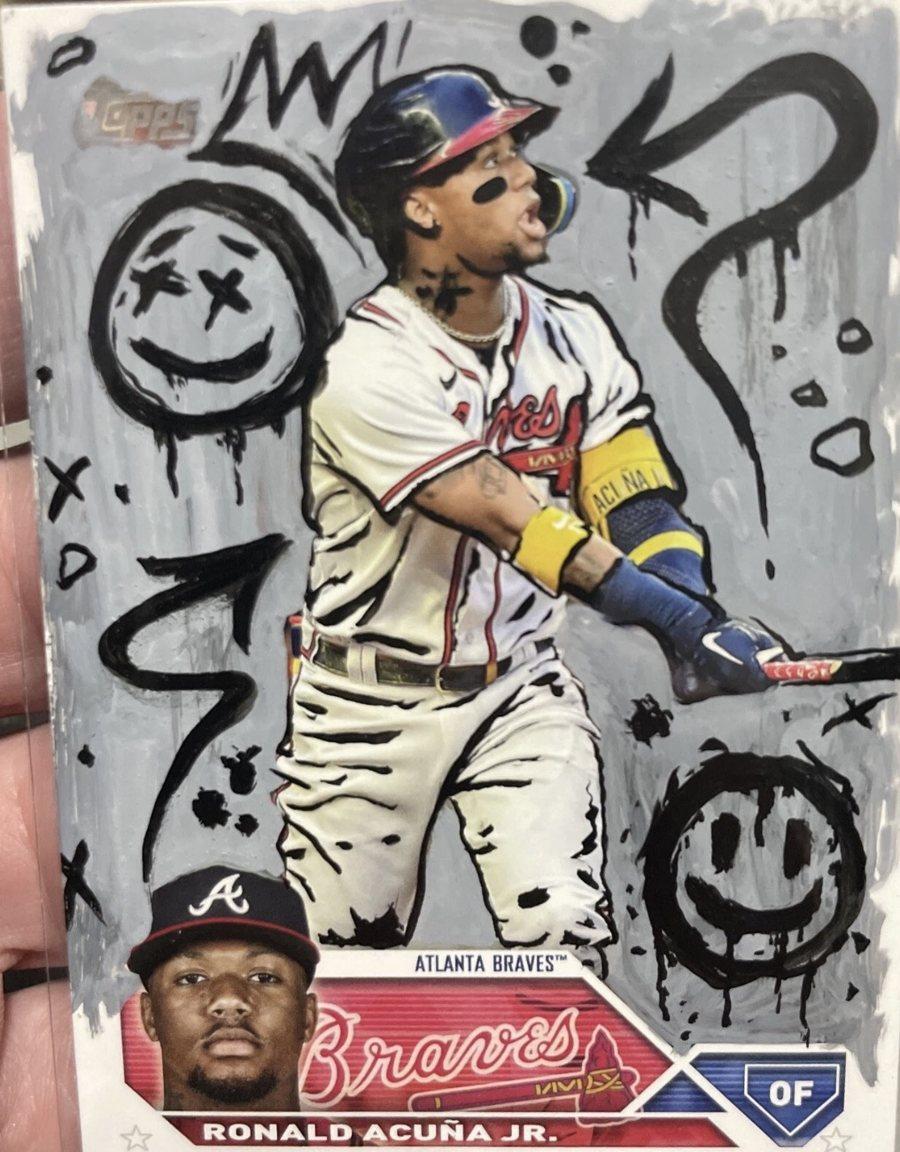
None of them started with a pile of gem mint cards. A commons box is the cheapest canvas in the hobby. Start with a paint pen or colored pencils on a card you were never going to sell, and practice on a few before you do one you like.
One caution if you ever want to sell what you make. An altered or custom card is art, not an issued card, and label it that way. Collectors who listed customs on eBay, even clearly labeled ones, have run into trouble with the platform’s authenticity program. (cllct)
8. Trade bulk for what you need
Bring a box of commons to a card show or your local shop and see what people will trade for. Doubles and bulk are currency when somebody’s finishing a set. If you’re in the Southeast, the Southeast card show calendar is a good place to start.
9. Sell them as a lot
One-off commons won’t cover the shipping envelope. A complete team set, or a clean lot sorted by team, has a better shot. Search eBay sold listings for lots like yours and see what they actually went for. Then decide if the time is worth it. For a lot of people it won’t be.
10. Play a real game with them
That one deserves its own section.
Play Lineup Showdown tonight
We built a two-player baseball game that runs on a pile of base cards. You and a friend shuffle your commons into one stack, deal 15 cards each, and build a nine-man lineup.
The last digit of each card number is that player’s Power. Roll a die, add the Power, and compare it against the other side’s pitcher. A table turns the difference into a strikeout, a single, a home run, or anything in between. Nine innings takes 20 to 30 minutes.
The part we like most is Hobby Boosts. A rookie card logo, a card that matches the position you put it in, three players from the same team, or a shiny parallel each add a point to that card’s roll. You get rewarded for knowing what you have, and nobody has to own anything expensive. A 1994 common can beat this year’s rookie.
The PDF has the rules, two lineup cards, a scoreboard, and twelve Dugout Cards you cut out if you want a little chaos. It’s free.
Free printable · v1.0
Lineup Showdown
Drop your email to unlock the PDF. You’ll also get Inside the Vault, our free weekly newsletter.
Free. Unsubscribe anytime.
This is version 1.0 and it needs real games to get better. After you play, there’s a two minute feedback form linked on the last page. Tell us what dragged, what confused you, and what rule you changed. If enough people want it, we will print a boxed version with a real action deck and cards in the box. No promises yet. Your notes decide that.